Kyphosis
Symptoms of kyphosis
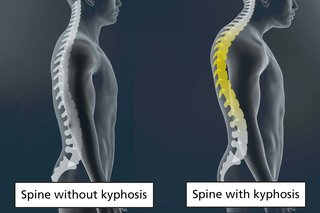
The main symptom of kyphosis is a hunched or rounded upper back. Sometimes your shoulders may also look rounded.
You may not have any other symptoms if the top part of your spine is only slightly curved. If the curve is more noticeable or gets worse, it can cause back pain and stiffness.
If you have a severe curve in your spine, it can cause more serious problems, such as very bad back pain and difficulty breathing.
Non-urgent advice: See a GP if:
- you think you or your child might have kyphosis
Tests for kyphosis
A GP may refer you to a specialist (orthopaedic surgeon) who will do some tests for kyphosis.
The specialist may examine your back while you’re bent forwards to see how severe the curve in your spine is and how flexible you are. They may also check your arms and legs.
You may have an X-ray and an MRI scan to look at your spine in more detail.
Causes of kyphosis
Kyphosis is often caused by bad posture or a problem with the structure of your spine.
It can also sometimes happen after a spinal injury or as a result of conditions like arthritis and osteoporosis.
There are 3 main types of kyphosis. Do not self-diagnose – see a GP if you’re worried.
| Type | Cause |
|---|---|
|
Postural kyphosis |
Usually caused by bad posture, postural kyphosis often affects teenagers. It’s the most common type of kyphosis. |
|
Scheuermann’s kyphosis |
The back of the bones in the spine (vertebrae) grow quicker than the front. This makes the vertebrae wedge-shaped and causes the spine to curve. |
|
Congenital kyphosis |
Where a baby’s spine does not develop properly and curves as they grow. Congenital kyphosis is rare. |
Treatment for kyphosis
Treatment for kyphosis is usually only needed if it's causing problems.
If treatment is needed, it will depend on the cause and how severe the curve in your spine is.
Treatments for kyphosis include:
- paracetamol or anti-inflammatory medicine to help ease back pain – check with a GP or pharmacist to find out which type of pain relief is most suitable for you
- physiotherapy to help improve posture and relieve back pain and stiffness
- a brace (a rigid support worn around the torso) to help straighten the spine if a child has mild to moderate Scheuermann’s kyphosis – a brace should only be worn under the supervision of a specialist, such as an orthopaedic surgeon
- surgery to straighten the spine if the curve is severe, getting worse or causing very bad pain (spinal surgery is usually only done if the benefits outweigh the risks)
Your child may have regular hospital appointments to check if the curve in their spine is getting worse. It may get worse until they’ve stopped growing.
Exercise and kyphosis
You should be able to exercise if you have kyphosis. Strengthening your core muscles (the muscles around your tummy and lower back) can help.
Speak to a healthcare professional before starting to exercise if you’re new to exercise or if you have not exercised for some time.
If you have physiotherapy, you may be given some specific exercises to help reduce back pain and stiffness. But they will not improve the curve in your spine or stop it getting worse.
Find out more
Page last reviewed: 30 December 2025
Next review due: 30 December 2028